Parent Questions, Answered
Talking with Your Child About Donor Conception and IVF: A Parent FAQ
Start early with short, honest answers, use real words like "donor" said calmly, and let your child's questions lead. You don't need a perfect script, only warmth, honesty, and a willingness to keep the conversation going as your child grows.
From Leo Asks Big Questions, the picture book by Jess Bierschank. General information and conversation ideas, shaped in part by donor-conceived people's lived experience, not medical advice or individual counseling.
Every family reaches this conversation differently. Some parents have talked about the donor since the day their child was born. Others are explaining IVF, preparing for a first conversation with an older child, or answering questions about a friend's family. Wherever you're starting, these questions offer answers you can make your own.
Starting the conversation
When should I tell my child they were donor-conceived?
Most guidance points toward starting early, so the story becomes a familiar part of your child's life instead of a reveal.
The UK's fertility regulator recommends talking from an early age, and many donor-conceived adults describe always knowing as what worked best for them. When the information arrives in small, calm pieces over the years, there is no single moment where a child has to absorb a secret.
Some donor-conceived people share painful experiences of finding out later in life, including feelings about secrecy and trust. Their stories are a strong reason to begin sooner rather than later, though every family's circumstances are different and there is no deadline you have already missed.
How do I actually begin the conversation?
Pick a calm, ordinary moment and offer a short, warm sentence about how your family began. You don't need a script or a perfect speech.
Something as simple as "I want to tell you about how you came to be part of our family, and I'm so glad you ask questions" opens the door. Car rides, bedtime, and walks are often easier than sitting down for a formal talk, because your child can listen without feeling put on the spot.
If it feels heavy to you, that's normal. Many parents carry worry from the fertility journey itself. If the feelings get in the way, a counselor familiar with donor conception can help you prepare while keeping your child's need for honest information at the center.
What if my child is very young and won't understand yet?
That's okay. You aren't explaining for full understanding today; you're building familiarity so the words feel normal as they grow.
Toddlers can hear a simple story such as "A donor helped our family have you," just as they hear other family stories. Use the names your child knows, whether that's Mama, Dad, a parent's name, or another family name. They don't need to understand reproduction yet; familiar, honest words give you something to build on as they grow.
Revisit the story as your child grows. Each retelling adds a little more detail, matched to the questions they're actually asking.
We haven't told our child yet, and they're older. Is it too late?
It's not too late. Honesty from here forward matters more than the age at which you start.
Be honest, including about the timing: "We should have shared this with you sooner, and I'm sorry. Here's your story." Acknowledging that you waited, without excuses, goes a long way. Donor-conceived people often say what hurt most was not the information itself but the silence around it.
Older children and teens may need time, space, and room for whatever feelings come up, including anger. Consider support from a counselor experienced with donor-conceived families, and expect this to be a conversation you return to rather than a single talk.
What to say
What words should I use?
Use real words like donor, egg, sperm, and embryo, said calmly and positively. Children take their cue from your tone.
Vague phrases can confuse kids or make the story feel unspeakable. A calm, factual "A donor helped us have you" tells your child this is an ordinary, welcome part of who they are.
A few language habits that donor-conceived adults often appreciate: say "donor-conceived person" rather than "donor baby," and remember the donor helped the parent or parents grow their family. Use the names and relationships that reflect your child's actual family, without assuming the number or genders of their parents. Facts and love can share the same sentence.
How do I explain it to a young child in simple words?
Start with the basic building blocks: a baby begins with an egg and a sperm, and your family needed a donor's help.
For sperm donation, you might say: "A baby starts with an egg and a sperm. A donor provided the sperm that helped make you." For egg donation: "A donor provided the egg that helped make you." For embryo donation: "An embryo made from an egg and a sperm was donated to help our family have you." Add names and details that fit your child's story, including who provided the egg or sperm and who carried the pregnancy, when known.
Keep the first answer short. If your child wants more, they'll ask, and you can build from there.
How much detail should I share, and when?
Answer the question your child actually asked, with a short and honest answer. Details can grow as they do.
A five-year-old asking "Where did I come from?" usually needs a sentence, not a biology lesson. Teens asking about the donor, medical history, or genetic relatives deserve real information about what you know and what you don't.
It's always okay to say, "That's a great question. Let me think about it and we'll talk tonight." What matters most is that your child learns their questions are welcome, so they keep asking you instead of going elsewhere for answers.
How do I talk about the donor without making it awkward?
Treat the donor as a fact of your child's story, spoken about with warmth and without drama. Curiosity about them is healthy, not disloyal.
Donor-conceived people often say one of the greatest gifts a parent can give is treating questions about the donor as normal. Ask what your child is curious about, listen without deciding what the answers should mean to them, and keep whatever records you have: donor profiles, medical history, clinic paperwork, and information about possible genetic relatives.
Be honest about the limits. Access to identifying information or contact varies by clinic, country, and the arrangement your family made. Avoid promising a future meeting or answers you may not be able to provide.
Talking with your child about IVF
Some families first look for answers under IVF rather than donor conception. Every family has its own relationships, names, and story. Start with the facts of yours. These conversation ideas are informed by questions parents and IVF-conceived adults raise, not a single script for every family.
How do I explain IVF to a young child?
You might say: "A baby starts with an egg and a sperm. A doctor helped them join outside the body, and then placed a tiny embryo into a uterus, where it could grow. That's called IVF."
For a toddler, you can begin with "A doctor helped us have you" and gradually add the words egg, sperm, embryo, and uterus. A uterus is the part of the body where a pregnancy grows. You don't need to explain every treatment step at once.
Use names and words that fit your family. If donated eggs, sperm, or an embryo were involved, include that part too, rather than letting IVF stand in for the whole story.
When should I tell my child they were conceived through IVF?
You can introduce IVF in small, everyday conversations while your child is young, then add detail as their understanding and questions grow.
A picture book or a question about babies can be a gentle opening. There is no need for a formal announcement or a perfect age when everything must be understood. Keep returning to the story, and let your child ask as much or as little as they want.
If your IVF involved donation, early openness about genetic origins has its own importance. Fertility guidance on donor conception recommends sharing that information from an early age. If your child is older and this feels difficult, a counselor familiar with your family's circumstances can help you prepare.
We used our own eggs and sperm. Is our child donor-conceived?
No. If IVF used no donated eggs, sperm, or embryos, your child is not donor-conceived. IVF describes how fertilization happens; donor conception means donated eggs, sperm, or an embryo were involved.
You might say: "A doctor helped an egg and a sperm join in a laboratory. Then an embryo was placed in a uterus, where it could grow." Explain who provided the egg and sperm and who carried the pregnancy, using the names your child knows and the details of what actually happened.
There is no need to introduce a donor into your child's own story if there wasn't one. Learning about donor conception can still help children understand friends whose families began differently.
We used donor eggs or sperm during IVF. Is explaining IVF enough?
Explaining IVF covers the treatment, but not who provided the egg or sperm. Your child also deserves an honest explanation of the donation involved in their conception.
For donor eggs, you might say: "We needed an egg from a donor. A doctor helped that egg join with sperm to make an embryo." For donor sperm, explain whose egg was used and that the sperm came from a donor. If an embryo was donated, say that an embryo made from an egg and sperm was donated to help you have a child.
Being curious about genetic relatives, resemblance, or family medical history can sit alongside love for the parents raising them. Share what you know, make room for their feelings, and be honest about information or contact you cannot promise.
Can a book about donor conception help our IVF family if we didn't use a donor?
It can open a conversation about how families begin, but choose words that match your child's own conception story. A donor-conception book is not the same as an explanation of IVF without donation.
Leo Asks Big Questions follows a curious boy with two moms whose story includes donor conception. Its glossary and tips for parents can support family conversations, including for parents who want to help children understand a friend's family.
If your child asks whether their story is the same as Leo's, you might say: "A doctor helped us have you through IVF. We didn't use a donor, so that part of your story is different from Leo's. Families can begin in different ways." The goal is understanding, not making every story match.
Read the guide: How to Explain Donor Conception (and IVF) to Your Child
Handling tough questions
Why do I have two moms or two dads?
Talk about the people in your child's family with warmth, and explain how your family began using the facts of their own story.
You might begin: "Families are made in lots of ways. In our family, you have two parents who love you." Use your child's names for each parent, and explain the donation or other details that are part of their story. Then make room for whatever they want to ask or share.
The book Leo Asks Big Questions shows this daily reality on every page: Leo has two moms and a dog named Rowy, and his story is happy, normal, and full of love.
Who is my donor? Can I meet them?
Share what you honestly know, including what you don't know. Be careful with promises about contact.
Tell your child what information exists: a donor profile, medical history, whether the donation was open or anonymous, and what the clinic or your country allows. Honesty about unknowns builds trust far more than optimistic guesses.
If your child wants to search for the donor or possible genetic relatives someday, that desire deserves respect. Curiosity about genetic connections can mean different things to different people, and it can coexist with love for the parents raising them.
Do I have brothers or sisters out there?
Possibly, and it's okay to say so. Donor siblings are a real and common part of many donor-conceived people's stories.
If you know or suspect there may be donor siblings, you can say: "It's possible. The same donor helped other families too, and some of them have found each other." Let your child decide how interested they are, and follow their lead rather than your own hopes or worries.
Keep any information you have about matching services or registries available as your child grows.
What do I say when someone at school asks about my child's family?
Give your child simple, proud words they can use, and remind them their story is theirs to share or keep private.
Practice together: "My family used a donor to help have me. Families are made in different ways." Kids feel more confident when they've said the words out loud with you first.
It also helps to teach classmates' families the same language. A line like "Some families need a little help to have a baby, and a donor is someone kind who provides it" works for kids and adults alike.
What if a family member disagrees with how openly we're talking about it?
As your child's parent, you can keep their need for honest information at the center, alongside any other parent or caregiver involved. Relatives and friends may have different views, and you can welcome their care without needing everyone's agreement.
You might say: "It's important to me that my child has honest answers about their story. Your support would mean a lot." Adapt the words to your family. You can set a kind boundary without turning the conversation into a debate.
A relative may need time or support to understand. You can acknowledge their feelings while asking them not to make your child's origins feel secret or shameful. Keep your child's questions and feelings at the center.
Will talking about it make my child feel different or upset?
Honest information, delivered with warmth, usually does the opposite: it tells a child there is nothing about them that needs hiding.
Donor-conceived adults describe a wide range of feelings about their origins, and all of them are normal. What children tend to remember is how their parents responded to questions, not the facts of biology. Calm openness gives them permission to feel whatever they feel.
A conception story is one part of a child, not the whole picture. Celebrate everything else that makes them who they are: what they love, what makes them laugh, and the questions they can't stop asking.
Sources and further reading
- HFEA: In vitro fertilisation (IVF)
The UK's fertility regulator explains fertilization in a laboratory and embryo transfer. Treatment information, not a prescribed script for children.
- r/IVF: Talking with children about IVF
A community discussion of when and how families explain IVF, including an IVF-conceived adult's perspective. Personal experiences, not clinical guidance.
- HFEA: Talking to your child about their origins
The UK's fertility regulator on early, ongoing conversations and support when telling an older child.
- ASRM: Informing offspring of their conception by donation
An ethics opinion from the American Society for Reproductive Medicine encouraging disclosure.
- r/askadcp: Donor-conceived people's perspectives
First-person accounts of how people were told, what language felt right, and what parents wish they had known. Personal experiences, not clinical advice, and no single view represents everyone.
Facing a specific question and searching for words? Try the donor conception conversation helper for age-based suggestions you can adapt, or read How to Explain Donor Conception to Your Child.
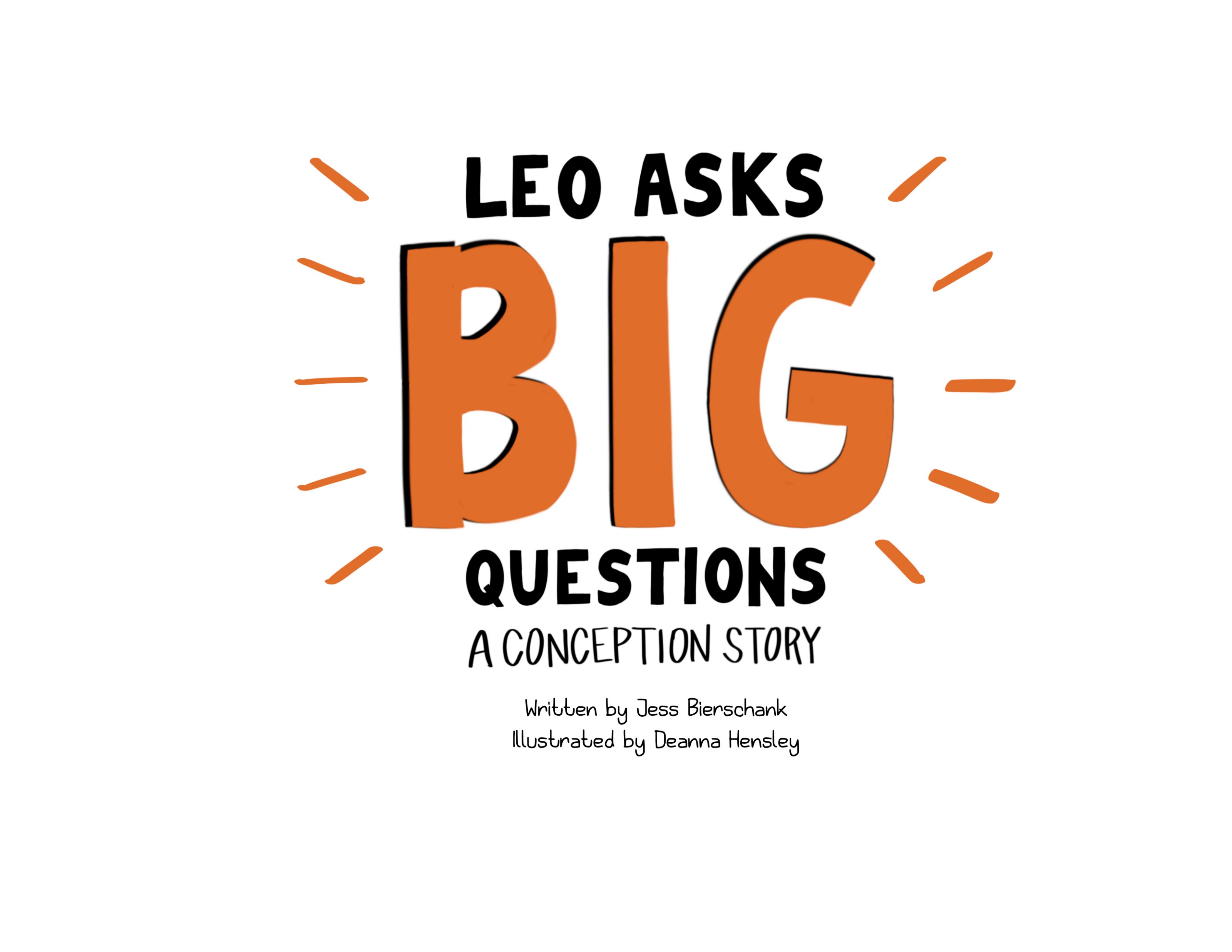
Read Leo's story together
A 32-page hardcover picture book for ages 0 to 8, with a glossary of big words and tips for parents to keep the conversation going.