Parent Guide
How to Explain Donor Conception (and IVF) to Your Child
Begin early with short, honest explanations about the egg, sperm, or embryo donation involved in your child's story. Revisit the conversation as they grow, welcome questions about genetic relatives, and make room for their feelings. IVF is a fertility treatment; it does not always involve a donor.
From Leo Asks Big Questions, the picture book by Jess Bierschank. General information and conversation ideas, not medical advice or individual counseling.
Kids are naturally curious about where they came from. If your family grew with the help of a donor or IVF, you might wonder when to start the conversation and what to say. You don't need a perfect script. Honest words, care, and a willingness to listen can help you begin. Donor-conceived people's experiences offer an important perspective alongside professional guidance, while leaving room for each child's own story.
When should you tell your child they are donor-conceived?
The HFEA recommends talking from an early age so the information can become a familiar part of a child's story. Some donor-conceived adults describe this as simply always knowing. Others share difficult experiences of learning later, including feelings about secrecy or trust. Experiences vary, and your child deserves space for their own response.
If you haven't started yet, you can begin with a simple, honest conversation. You don't have to find perfect words before taking that step. If it feels difficult, a qualified counselor familiar with donor conception can help you prepare while keeping your child's need for information central.
How do you explain donor conception to a young child?
Young children can begin with short, concrete answers. For sperm donation, you might say: "A baby starts with an egg and a sperm. A donor provided the sperm that helped make you." For egg donation, explain that a donor provided the egg. For embryo donation, explain that an embryo made from an egg and sperm was donated. Use the names your child knows, and add details that reflect your family's own story.
Use real words like "donor" and "IVF" instead of vague phrases. Kids take their cue from you. Use these words calmly, and let your child have their own feelings about their story.
Is IVF the same as donor conception?
No. IVF, or in vitro fertilization, is a treatment in which an egg is fertilized with sperm outside the body and an embryo may then be transferred to a uterus. IVF may or may not involve donated eggs, sperm, or embryos. Donor conception can also happen without IVF, such as through donor-sperm insemination.
If IVF is part of your child's story, you might say: "A doctor helped the egg and sperm join, and then put the tiny embryo into a uterus where it could grow." Add who provided the egg or sperm when relevant, rather than using IVF as a substitute for explaining donation.
Words that belong to your child
Many donor-conceived adults point out that the donor helped their parent or parents grow their family, rather than donating to the child. Some families simply say "the donor" or use the person's name when known; others use "biological mother" or "biological father" as the factual description. There isn't one right answer, but donor-conceived people often appreciate when parents use honest, factual language and let the child find their own words as they grow.
A few habits go a long way: say "donor-conceived person" rather than "donor baby," and use the family names and relationships that reflect the child's actual life. You don't need to add a parent or assume a particular family structure to explain their origins. Facts and love can share the same sentence.
Let their questions lead
Your child will come back to this again and again, often at unexpected moments: in the car, at bedtime, after a friend's comment at school. Each time is a chance to add a little more.
It's okay to say, "That's a great question. Let me think about it and we'll talk more tonight." What matters most is that your child knows they can always ask.
Welcome their curiosity about the donor
Donor-conceived people say one of the greatest gifts a parent can give is treating their curiosity about their origins as healthy and normal, not as a betrayal. Questions about the donor, family medical history, or half-siblings are natural. Curiosity about genetic relatives can mean different things to different people. Listen without deciding what those connections should mean to your child.
Keep available donor records, medical history, and information about possible genetic relatives. Access to identifying information or contact varies by clinic, location, and donation arrangements. Be honest about what you know and what you don't; avoid promising a future meeting or answers you may not be able to obtain.
Make it about who they are, not only how they got here
A conception story is one part of a child, not the whole picture. Celebrate everything else that makes them who they are: what they love, what makes them laugh, the questions they can't stop asking.
That's why Leo, the boy in Leo Asks Big Questions, loves soccer, the beach, flying kites, and his dog Rowy. His conception story matters, and so does everything else about him.
Hear it from people who've lived it
The r/askadcp community on Reddit includes donor-conceived people sharing how they were told, what language felt right to them, and what they wish had gone differently. These personal accounts can deepen your understanding, but no thread represents every donor-conceived person or replaces professional support.
Approach it with an open heart. Some accounts may be difficult to read. Listening can help you understand needs and feelings different from your own.
A book written for the child
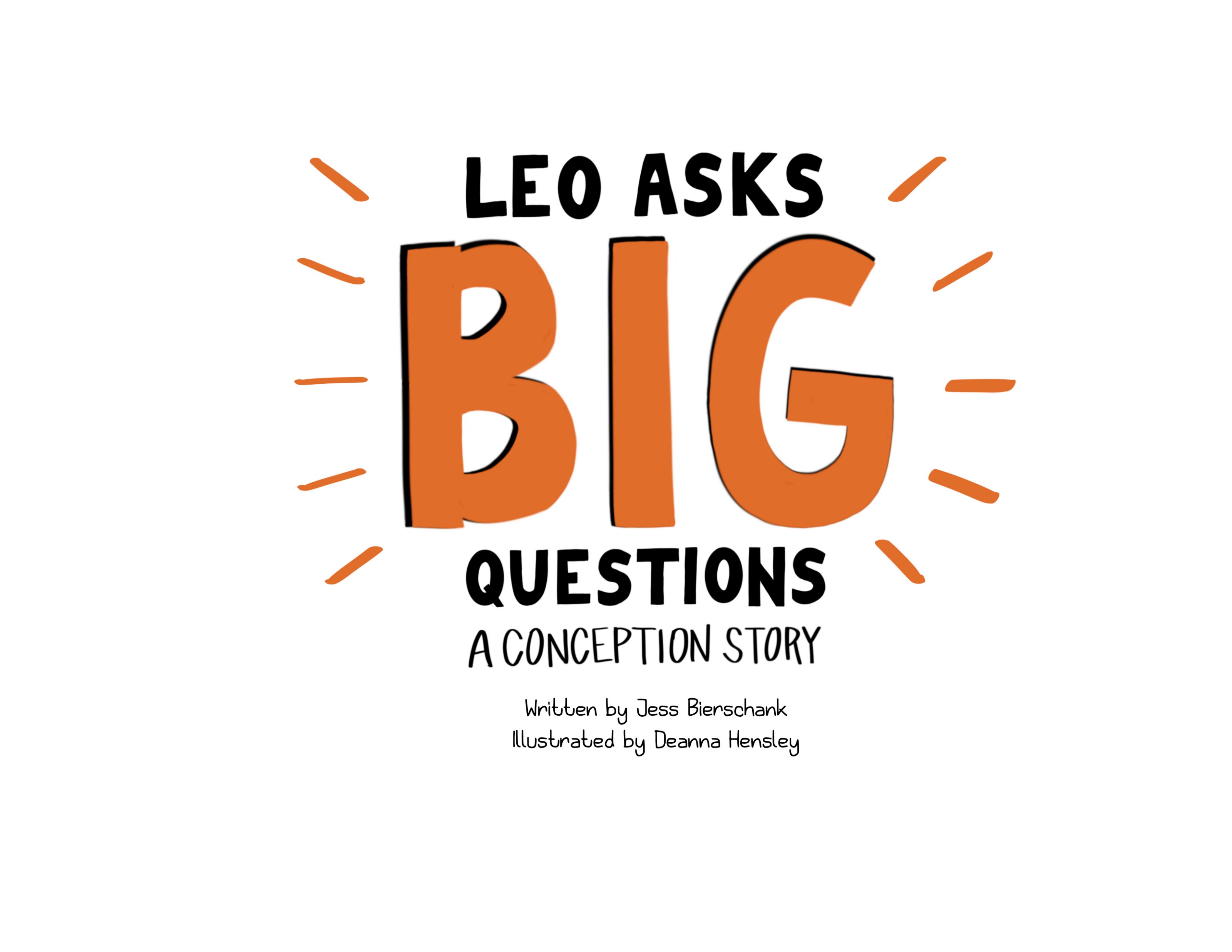
Leo Asks Big Questions was written by IVF mom Jess Bierschank for her own son. It speaks directly to kids, in their world and their words, and includes tips for parents to keep the conversation going.
Sources and further reading
- HFEA: Talking to your child about their origins
The UK's fertility regulator offers guidance on early, ongoing conversations and support when telling an older child.
- ASRM: Informing offspring of their conception by donation
An ethics opinion from the American Society for Reproductive Medicine encourages disclosure and discusses family decision-making.
- r/askadcp: Donor-conceived people's perspectives
First-person accounts and discussions, not clinical advice or a single view shared by everyone.
Looking for words for a particular question? Try the donor conception conversation helper for AI-generated suggestions you can adapt.
Read Leo's story together
A 32-page hardcover picture book for ages 0–8, with a glossary and tips for parents.