Reciprocal IVF: How to Tell Your Child Their Story (A Guide for Two-Mom Families)
By Jess Bierschank, author of Leo Asks Big Questions · Published · Last updated
Reciprocal IVF can be explained as one mom providing an egg, a donor providing sperm, and the other mom carrying the pregnancy. Use the names your child knows and share each part honestly. Both moms are their parents; genetic connections and pregnancy are different parts of the same family story.
From Leo Asks Big Questions, the picture book by Jess Bierschank. General information and conversation ideas, not medical advice or individual counseling.
This guide is for two-mom families whose story includes reciprocal IVF. It is not a script for every family with two moms. Start with what actually happened in yours, including whose egg was used, who carried the pregnancy, and the sperm donor’s part. Your child can understand those differences without having to rank their parents.
What is reciprocal IVF?
Reciprocal IVF is a treatment in which one partner’s egg is fertilized with donor sperm and an embryo is transferred to the other partner’s uterus. In a two-mom family, one mom provides the egg and the other carries the pregnancy. It combines IVF treatment with sperm donation in this story.
The mom who provides the egg has a genetic connection to the child. The mom who carries the pregnancy has a gestational connection. Those are factual descriptions of different roles, not measures of whose parenthood matters more. Legal parenthood depends on local rules, so seek qualified advice for your circumstances.
How do I explain that one mom's egg and the other mom's pregnancy made our family?
You might say that an egg from one mom joined with sperm from a donor, and a doctor placed the embryo in the other mom’s uterus, where the pregnancy grew. Use your child’s names for each mom. Explain these roles as facts, not a contest about who contributed more.
For example: “Mama’s egg and sperm from a donor made an embryo. A doctor put that embryo in Mommy’s uterus, and you grew there. Mama and Mommy are both your moms.” Change the names and details to match your family. A uterus is the part of the body where a pregnancy grows.
Young children may ask the same question many times. Repeating the explanation gently can make it familiar; you do not need to add every treatment detail before they are interested.
What words should we use for the donor?
Use donor and sperm, and explain that the donor is a real person your child is genetically connected to. Share a name or known details when appropriate, without assuming character or promising contact. As your child grows, welcome their own words for that person and the meaning of that connection.
You can say, “We needed sperm from a donor to join with the egg.” If the donor is known, explain the actual relationship separately. If identity information may become available later, describe the arrangement carefully. “Anonymous” is not a guarantee that DNA testing cannot reveal relatives.
What if our child asks which mom is their "real" mom?
You can answer that both moms are their parents, then gently ask what they mean by real. They may be asking whose egg was used or who carried them. Give those facts directly, without treating the question as rejection or asking them to choose which relationship matters more.
You might say, “We are both your moms. Are you wondering whose egg was used, or whose uterus you grew in?” Follow their question rather than correcting their feelings. A child may be exploring resemblance, a classmate’s comment, or a word they heard, and their curiosity deserves an honest response.
Books that can help.
A picture book can make family conversations feel ordinary, but it should not replace the facts of your own story. Leo Asks Big Questions is a donor-conception story for two-mom families and can start the conversation. Explain reciprocal IVF alongside the book rather than assuming every two-mom story depicts it.
Leo’s glossary and tips for parents can give you words to begin. Pause when your child notices a similarity or difference, and name the details that belong to your family. Reading can be an opening, not a test of whether their story matches a character’s.
Sources and further reading
- HFEA: Reciprocal IVF
Treatment information from the UK fertility regulator; individual medical and legal circumstances vary.
- HFEA: Talking to your child about their origins
Guidance on early, ongoing conversations about donor conception.
For the evidence behind these conversations, read what the research says about telling your child. Looking for words for a particular question? Try the donor conception conversation helper for AI-generated suggestions you can adapt.
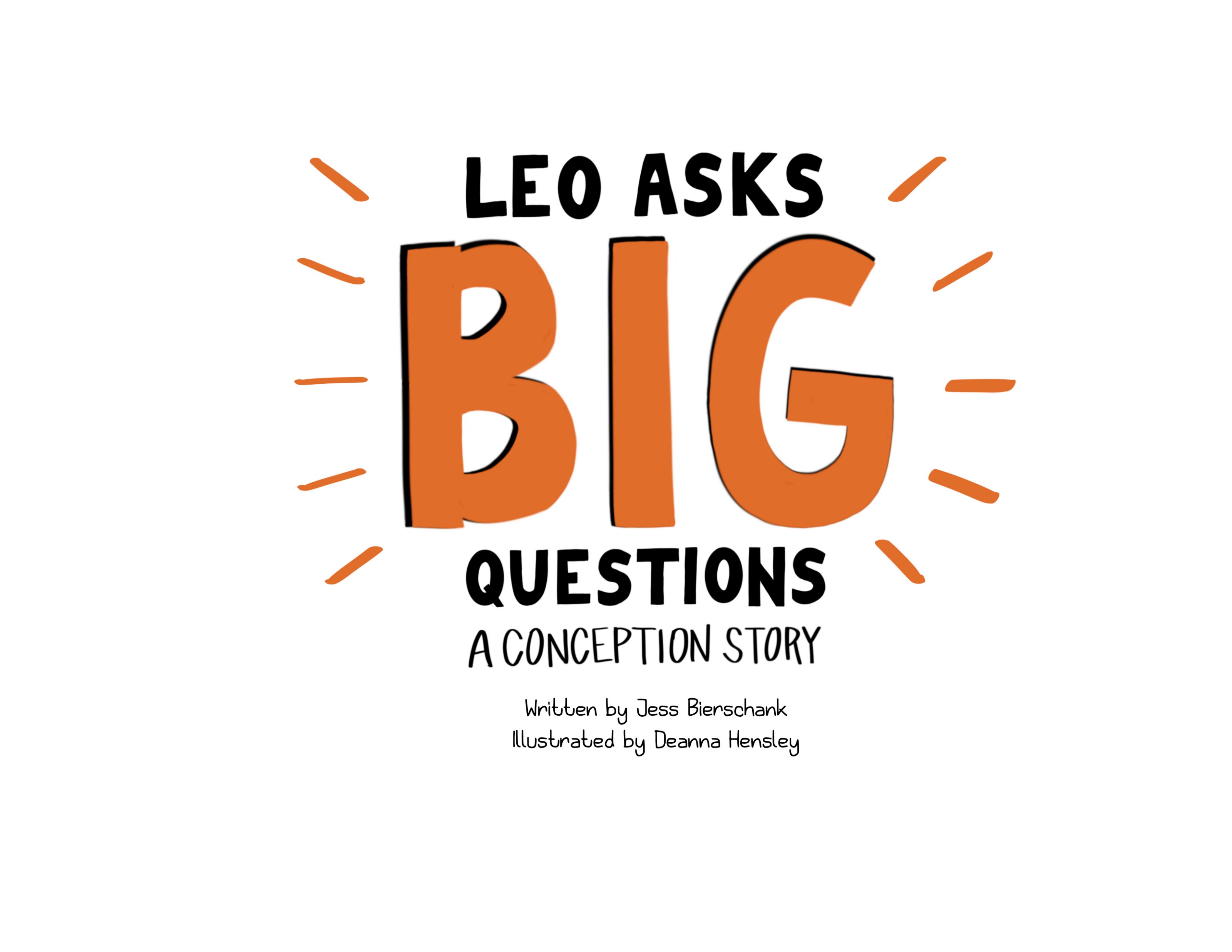
Read Leo's story together
A 32-page hardcover picture book for ages 0–8, with a glossary and tips for parents.
Explore the book